Form
Curves, openings and protective masses give physical presence to memory, balance and change.

Sculptor & ceramic artist
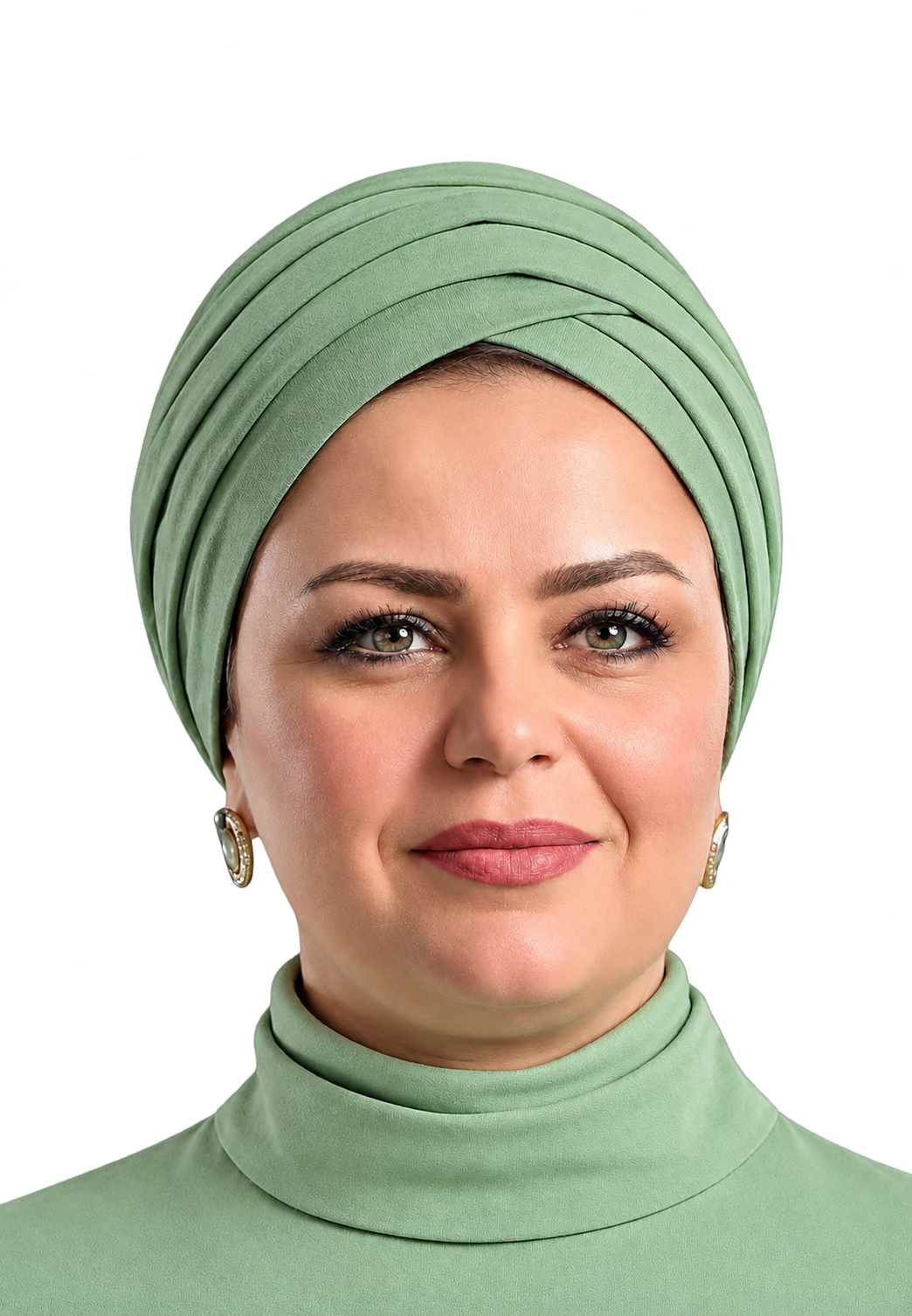
For more than three decades, Fawzy has pursued an expressive and experimental practice shaped by the human figure, nature and the physical intelligence of materials.
Practice
Fawzy’s figures move between recognisable bodies and distilled forms, holding inner and outer worlds in dialogue.
Curves, openings and protective masses give physical presence to memory, balance and change.
Bronze and ceramic preserve gesture, pressure and layered making, keeping process present in the finished form.
Mass and void, stillness and transformation become ways of approaching an interior world.
Upcoming exhibition
Nineteen bronze sculptures exploring memory, protection and the freedom to reveal or conceal.
Critical text
In her exhibition MYT, artist Amany Fawzy adopts a distinctive approach in establishing and articulating her concept. She seeks to liberate her imaginative constructs from the fixed conventions of the familiar aesthetic, whether embodied in form or vessel.
In her exhibition MYT, artist Amany Fawzy adopts a distinctive approach in establishing and articulating her concept. She seeks to liberate her imaginative constructs from the fixed conventions of the familiar aesthetic, whether embodied in form or vessel. Undoubtedly, her experimentation—both at the conceptual level and in her mode of aesthetic presentation—evokes the relationship between form and its lightness, between the embodied and the inner void. Perhaps she sought to offer an interpretation of the feminine, as though affirming lives shaped by both victories and defeats in a world increasingly overwhelmed by its contradictions.
Her means of expression, therefore, are visions that move between eruption and stillness: a revolution concerned with adapting ambition so that it may complete its cycle within life. Her intention is for contemplating the sculpture to become an observation of the invisible interior, rather than merely a surface upon which brilliance is reflected and at times mingles with rugged textures.
This is how Amany Fawzy imagines life as an artistic expression. From this perspective, balance is no longer an expression of a fixed state, but rather a renewed act, reconstructed at every moment. In this context, true stability is not granted once and for all; it is continuously acquired through an ongoing negotiation between opposing forces—weight and lightness, stability and hesitation, certainty and doubt.
According to her selective approach, her aesthetic project is built upon seemingly self-evident ideas: challenge, resistance to fracture, and confrontation. These are expressions of what lies within, with all its turbulence and tension. Overall, one can sense her desire to accommodate sensory and symbolic contradictions through a new material language drawn from her own self, reflections, and accumulated experience in executing techniques that rely on bronze as a primary material—one whose exterior can be shaped in accordance with the symbolic content she has embraced.
This provides a compelling interpretation of her inclination toward reinforcing the latter, allowing it to be projected onto forms conditioned by balance and stability, in contrast to a movement that overflows into creating divergent worlds for the body. This contrast reveals her mastery in employing oppositions. Between softness and roughness, smoothness and petrification, light and darkness, Amany Fawzy’s expressions unfold, alongside intermediate solutions that bring figuration and abstraction together.
In my view, MYT is not merely an exhibition portraying feminine states charged with the “clamor of the feminine.” It is as though the artist is tracing the substance of a narrative concealed within the bodies of these women, almost recalling the tales of One Thousand and One Nights, which reinvented the woman in a creative form—one that never ceased to offer its original archetype anew each night.
The women of Amany Fawzy release their imagined, woven narratives through bodies united by pain just as they flourish through hope.
Studio enquiries